SIP Services
Through the SIP UA SIP User Agents webRTC clients have seamless access to a wast amount of SIP functionality:
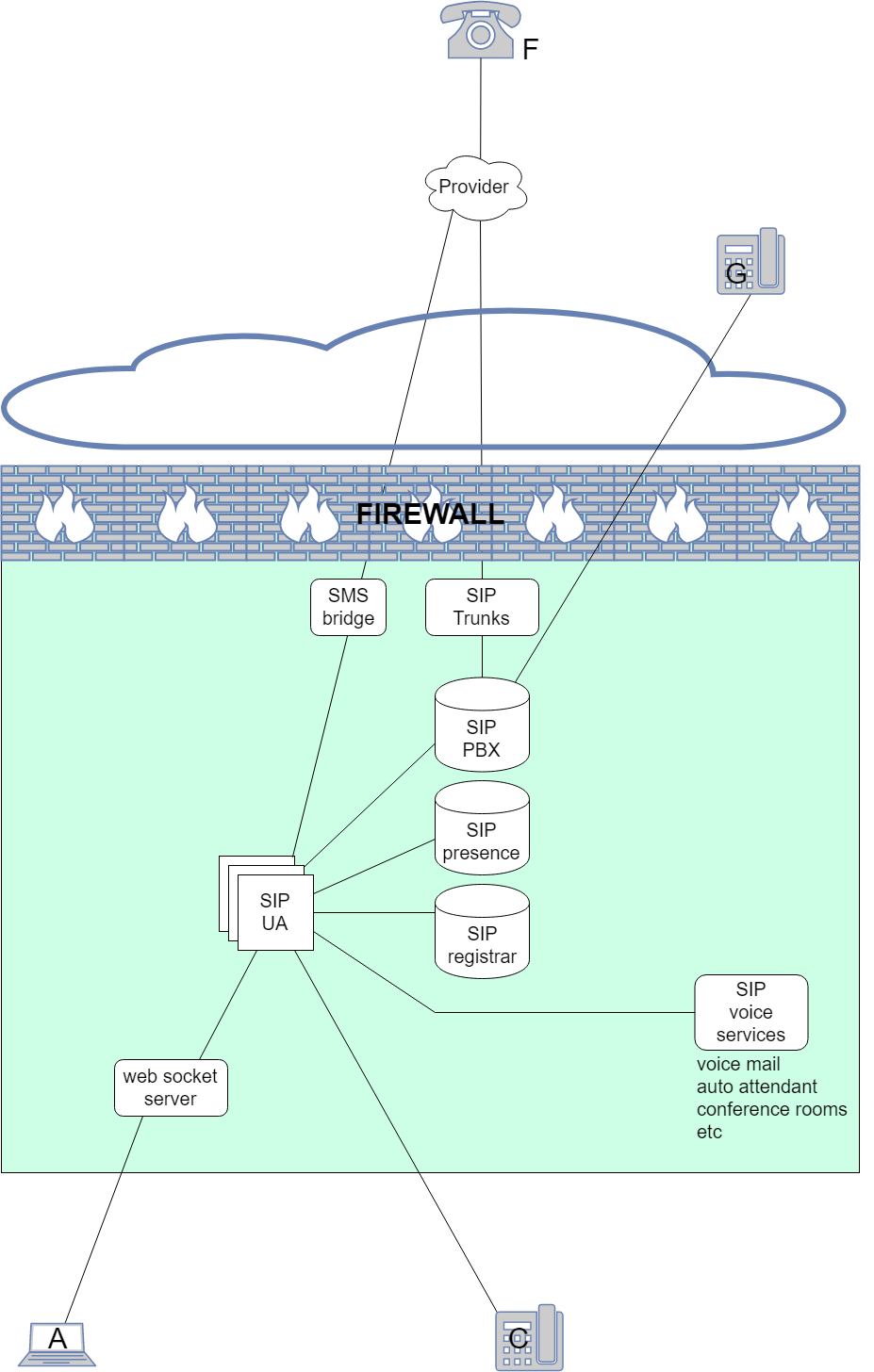
The web socket server connects webRTC client A with a SIP UA. Through this SIP endpoint A can place calls to SIP phones C and G, the RTCgate signaling in the web socket connection is translated to SIP signaling.
WebRTC client A can also provide a SIP name and password and register itself on the built in SIP registrar in the Ingate unit, or any external SIP registrar. If the client is registered on a SIP registrar it can start receiving incoming SIP calls. The SIP registrar can also be used for authentication, allowing only logged in users to use the client.
Client A can also send presence information to the Ingate unit's built-in SIP presence server, or any external presence servers. Available/busy/in meeting/etc. It can also fetch information from SIP presence servers about other users' availability.
The SIP UA can also use the Ingate unit's SIP PBX, or any external SIP PBX to use SIP Trunks, short numbers, etc.
Using a telephony provider A can even make ordinary telephone calls (F). If provider provides a telephone number A can even receive incoming telephone calls. Providers with SIP/SMS bridges can use the Ingate unit's built-in SMS bridge client to send (and receive) SMS text messages.
WebRTC clients can also make use of advanced functions of the Ingate unit such as voice mail, auto attendant services, voice conference rooms etc.
Every SIP feature in the Ingate unit -or anywhere on the Internet- can be used by WebRTC clients using the SIP UA bridge between the two worlds.